

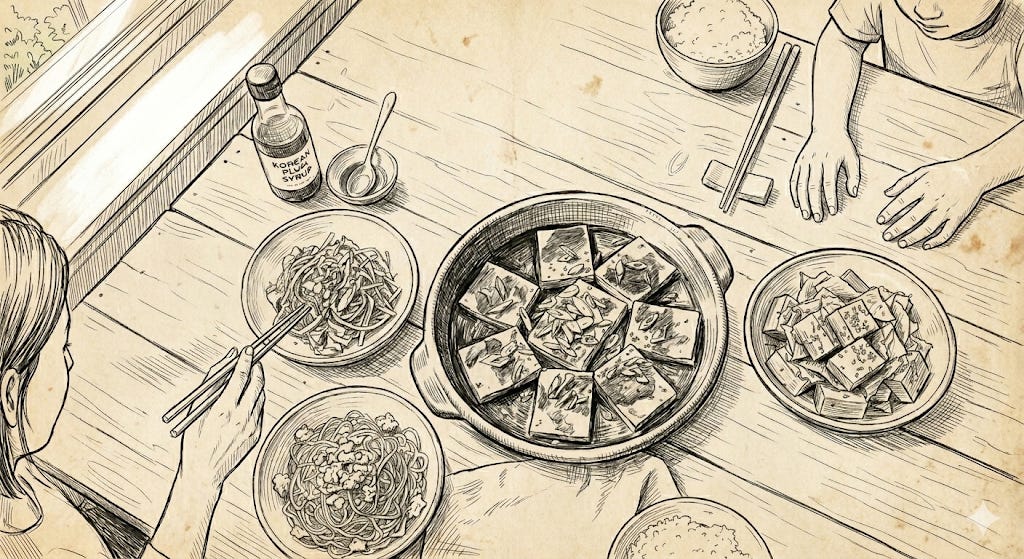
This week took a mostly Korean turn, as we had tofu that needed to be cooked. The recipe I landed on was Korean Style Spicy Braised Tofu (The Wok, pg 501). I’ll come back to that dish in a moment, but I will say The Wok isn’t focused on a single cuisine, so to round out a Korean meal, I needed to add some banchan to the mix. I decided to cook a few things from one of America’s Test Kitchen’s new books, UMMA. This book is phenomenal, as you will begin to see as I cook more and more from it. Let’s start with the tofu.
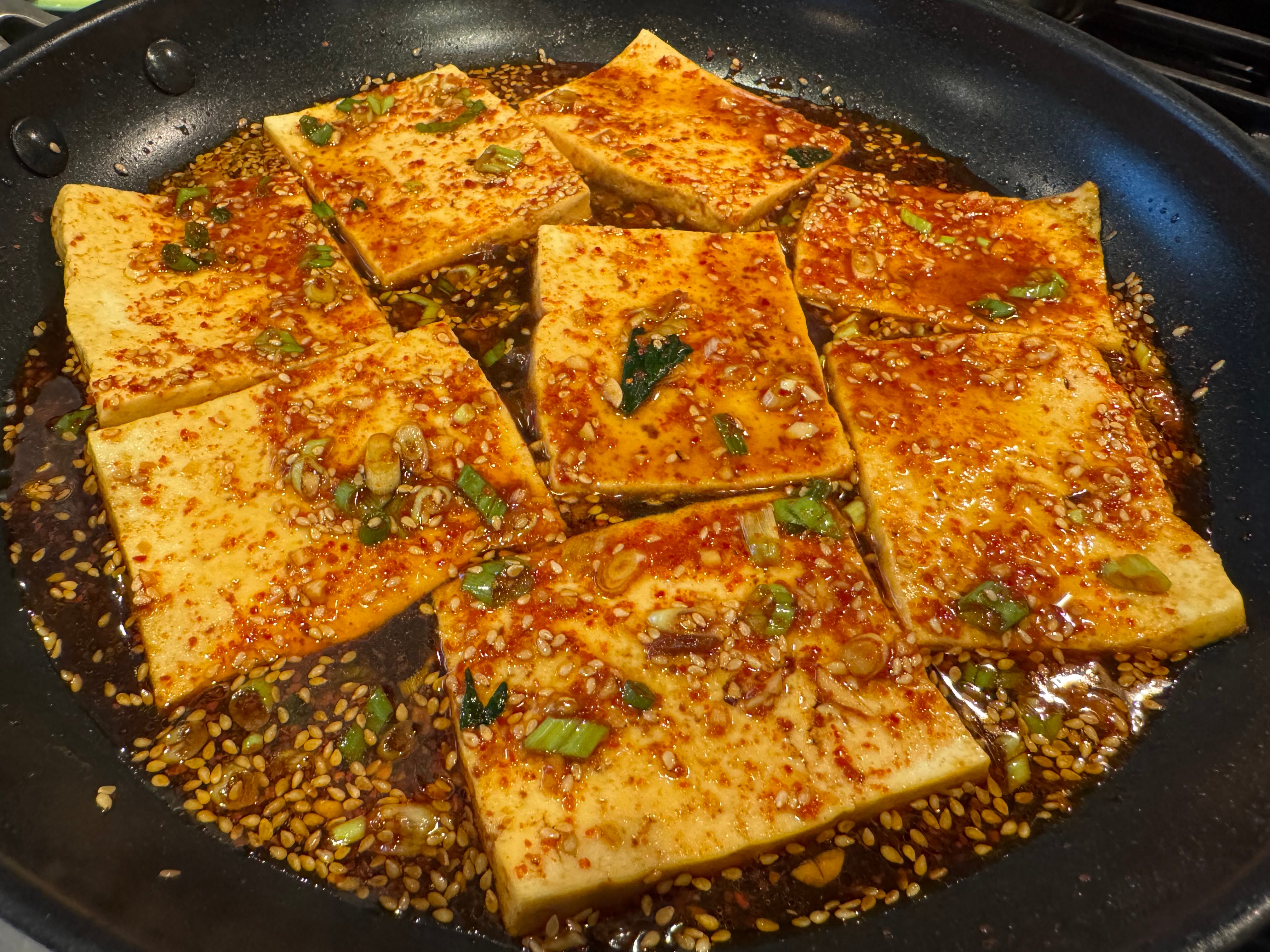
This may easily be my new favorite way to eat firm tofu. You blanch the tofu in hot water to get the pores to open up and then braise the slices in a spicy gochujang sauce. It has a kick, but it isn’t too much, and the umami that the sauce brings takes the dish to a new level. I’m taking a break from Korean food for a week or two, and I still wouldn’t mind making this one again. I will say that I think this dish feels forced for The Wok. Kenji López-Alt has you place the slices up the sides of the wok and rotate them into the sauce, but that makes no sense to me when you can just use a nonstick skillet and slow-braise the slices on a flat surface. I cannot for the life of me understand what the wok adds or does better for this dish. Regardless, the recipe is a chef’s kiss.
UMMA is an amazing cookbook. It’s put together by one of ATK’s social media directors, who is Korean. The cookbook is a love letter to her mother and her mother’s recipes — she worked with her mom to develop the book. I opted for two banchan to go with the tofu.
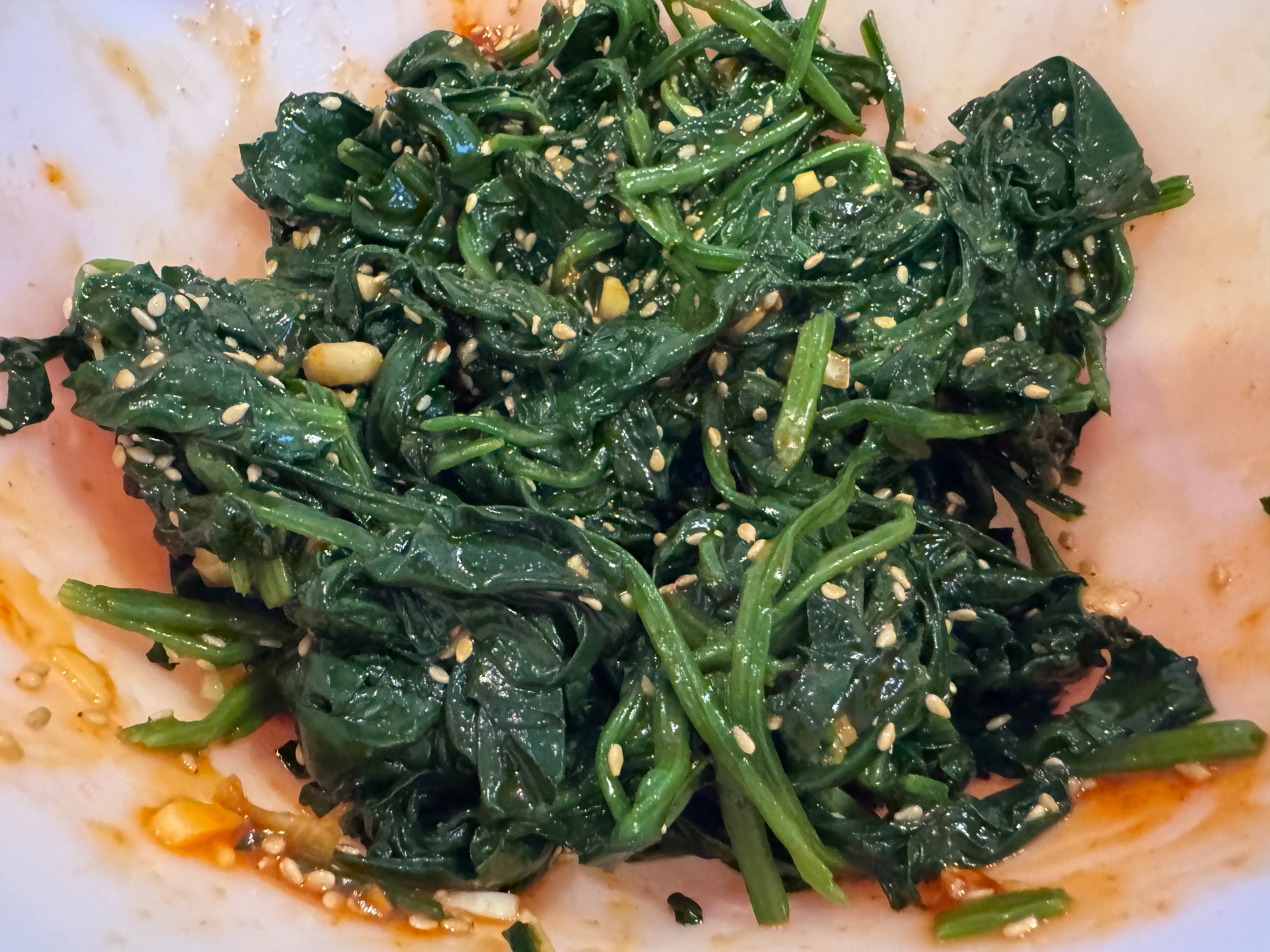
Seasoned Spinach with Gochujang (UMMA, pg 54). This dish was SO GOOD, especially with white rice. Besides the tofu, I found myself coming back to this dish over and over throughout the week. Both this and the next dish use an ingredient that was new to me: Korean plum syrup. If you find a Korean recipe that calls for this and they give you a substitution, just go find the real thing before you make the dish. The tartness and sweetness it adds has a flavor that is unique and familiar at the same time. It makes the dish.
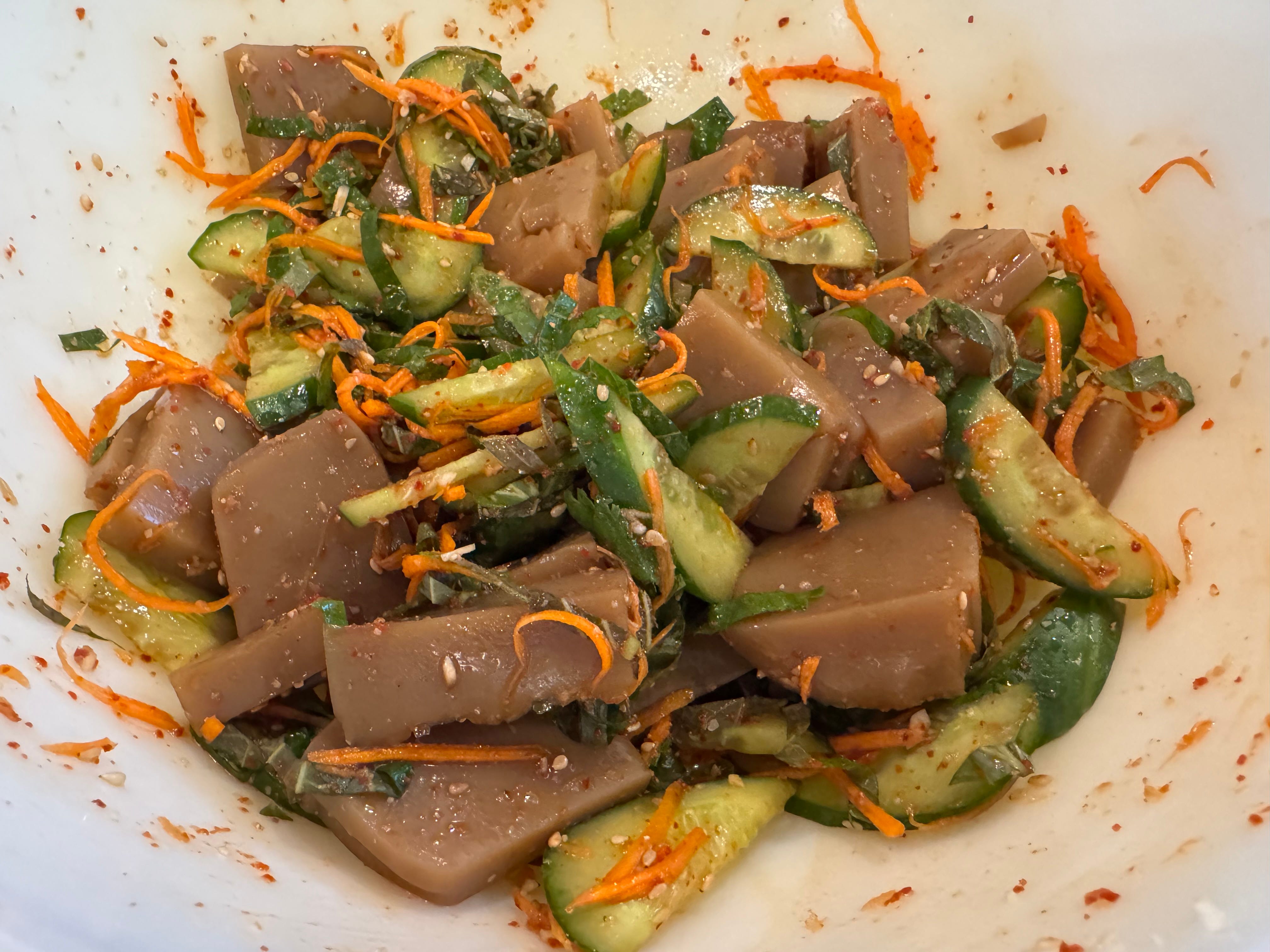
The last Korean dish for the week was Dotorimuk Muchim (UMMA, pg 62). This is a salad whose base is acorn jelly. The recipe calls for making your own jelly, but I will admit to cheating and buying it from the market. One of the benefits of having a mostly Korean grocery store near you is having access to fresh deli ingredients like this. The texture is somewhere between a custard and boba — very refreshing, with a slightly nutty taste — but I believe it is primarily about the texture. The flavors of this dish were dominated, in a good way, by the interplay of the plum syrup and the spicy, herby flavor of the sesame leaves.
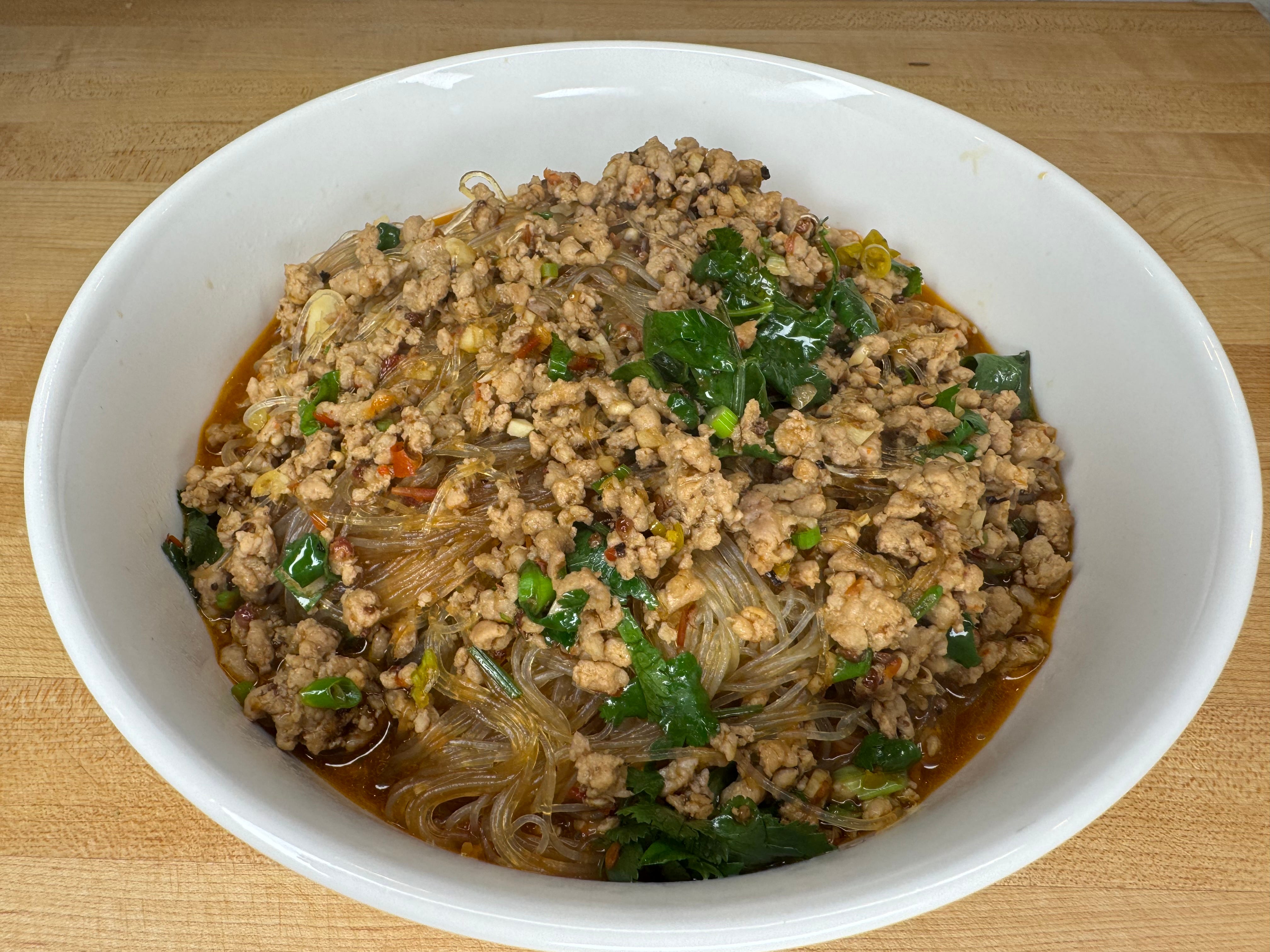
The last dish I made this week was one I’ve made before: Ants Climbing Trees (The Wok, pg 382). This dish is named for the way the bits of ground pork cling to the noodles. I tend to push things on the protein side, so admittedly this has more pork than the recipe calls for. One of my favorite flavor profiles is mala, the hot numbing flavor so unique to the Sichuan province of China. This is a cravable dish. I will say that I made a bit of a mistake this time and didn’t quite drain the noodles enough before adding them to the pork and sauce, so the sauce ended up a little thin.
If there’s a takeaway this week, it’s that the best meals can sometimes come from mixing your sources. The Wok brought the braised tofu and the Ants Climbing Trees, but it was UMMA that turned dinner into a full Korean spread and introduced me to Korean plum syrup in the process. Cooking through one book is great for building skill, but branching out is what keeps you curious. It’s how you stumble into new favorite ingredients and avoid the rut of making the same things on repeat.